
Don’t put her on a pedestal.
Nefertiti's Tomb came from part of a novel I'm writing about Nefertiti's first days on the throne…
We are at a pivotal point in “time” where what is lost will help us recover Earth’s story. Her story. Their Story. Your story.
“If we can accept this polarity, the torn cargo hold, and the fallen debris, then we cannot fear.
“Evolution is motion. Thought. It's as natural as the tide. If and when we tip, Earth will tip because of us, and when we steady ourselves despite the list, we will remain upright.”
-Excerpt from Nefertiti’s Tomb
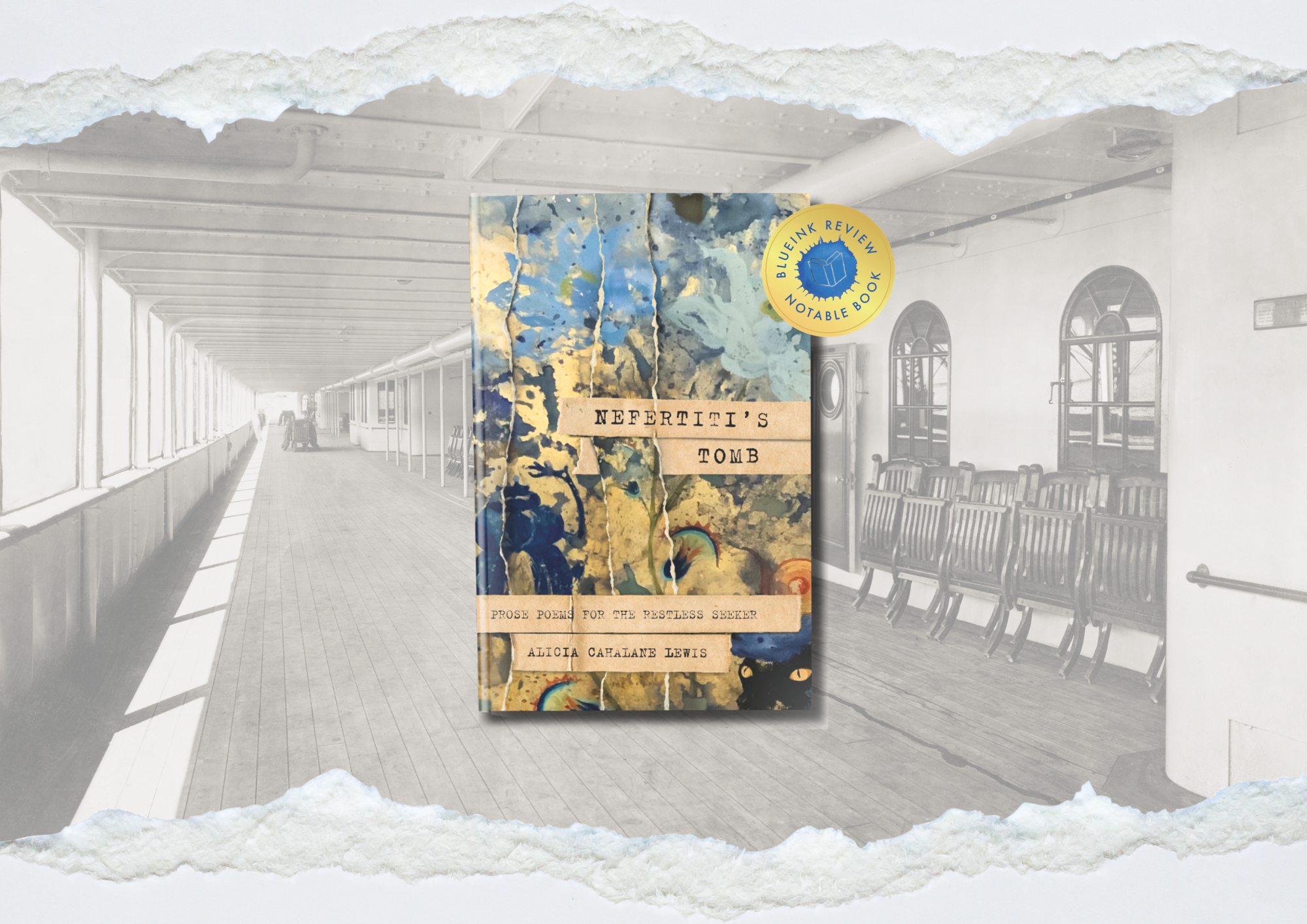
Nefertiti's Tomb came from part of a novel I'm writing about Nefertiti's first days on the throne. I decided to format the novel from her vantage point, and as a twelve-year-old, she would have come to it with certain expectations and certainly any number of surprises. By focusing on the first year of her reign, I will introduce the reader to her religious ideology and the plan for her future: to bear children.
“I don’t want her to be a character that’s just an enigma that we’ve put on a pedestal because she’s beautiful and she’s mysterious.”
The prose poetry’s fragmented format of Nefertiti’s Tomb came from the outtakes, or the unused fragments of that novel. I had initially written all about Nefertiti's life and death, but rather than include it in the book, I took most of it out to leave room for a more focused young woman's coming-of-age story.
Of course, readers might already be familiar with my previously published novella that also explores the goddess queen Nefertiti, The Longest Day. This exploration, and the uncanny similarity of current events, bore forth another (forthcoming) novella of a more political nature.
The resulting collection of prose poetry for Nefertiti’s Tomb is an urgent, layered work connecting Nefertiti, historical loss, and contemporary democracy. Through art and poetry, I invite readers into making those connections.
“Nefertiti is bigger than Egypt. She’s not Egypt the way we know Egypt; she’s Egypt the way she told Egypt to be.”
The poetic fragments in Nefertiti's Tomb feel like they belong. We don't really know what happened to her. I wanted to create ambiguity, uncertainty, and incompleteness. The block styling of the poetry acts as building blocks for her tomb and represents the fragments of thinking left undiscovered.
I also think of the scattered debris where the Titanic sank and the miscommunication and SOS fragments of information on the telegrams. Blocks of ice. Rivets. Pieces of the whole now shattered.
I couldn't see it styled any other way.