
“You’re Sort Of Like A Vagabond”
Guest blog and original poetry by Julie Anne Hoeflinger
Walking through Hammersmith station on my way home
from work one day, I decided to stop and listen to one of the fundraising people that fill every station, the ones we usually dodge on our daily commute to the office but that I’ll donate to from time to time (in the rare occasion I’m not in a rush, of course, to no one’s fault but my own).
It was February 23, 2025. The man was wearing a red collared shirt and must have been around my age. He caught my gaze, which I usually keep glued straight ahead. “Can I have a moment of your time, miss?” I approached with a cheery smile. He began sharing the mission of his group, which is to donate money and resources to kids living in neighborhoods with knife violence. He gave his spiel quickly and then began asking me questions about myself. Whether it was a sales tactic or not, I entertained it authentically because I was going to donate anyway.
“So what’s the plan?”
He asked me about what I do. I told him that I’m a journalist and writer, well, that I was trying to be. “So what’s the plan?” I continued scribbling out the donation form as I told him that I’m moving back to the States in a month, that I loved my couple years studying and working in London but had this nagging feeling I’d overstayed my visit, that I was going to get a van to live and work in, that I didn’t have a job lined up just yet but after a year of not hearing back from any applications I was ready and almost desperate to move back home and was happy to live with my parents for a bit until I got it figured out, that the world was going up in flames and that this seemed as good a plan as any considering the current job market and that democracy is hanging on by the seams.
I blabbed on like that, increasingly aware of how unconvincing and maybe even reckless myhalf-baked plan sounded, but I tried to own it nonetheless. He listened on with amusement. “You’re sort of like a vagabond, yeah?” He said with a smile. I paused, not at all realizing that’s how I was being perceived. “I don’t know if I’d say that...” I asked exactly what he meant. “You know, someone who moves from place to place doesn’t stay anywhere too long.”
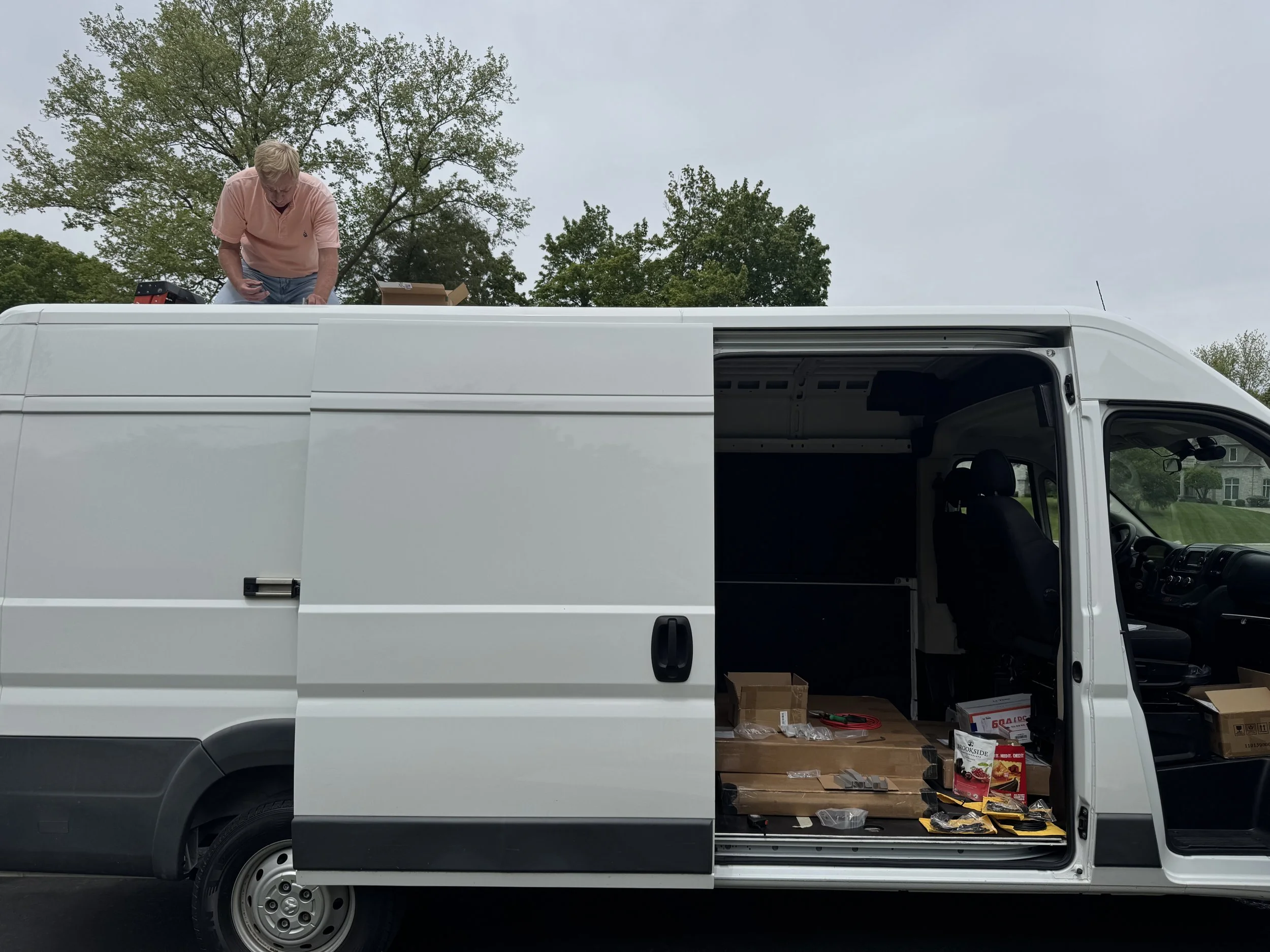
“You’re sort of like a vagabond, yeah?”
I hadn’t known much about what it meant to be a vagabond other than that it was absolutely not a word that anyone had ever used to describe me. “Reserved,” “responsible,” and “mature for your age” were all descriptors assigned to me throughout my life, and “vagabond” was certainly never one of them. My sister might’ve come closest to it—transferring high schools three times, transferring colleges three times, moving in and out of different cities, always on the run, but if there was an equal and opposite force to that, it was me. If she was a current, I was an anchor. In fact, if you spoke to her five years ago, she’d probably laugh at the very idea that the word “vagabond” would ever be used in the same sentence as my name.
I stayed in Ohio all four years of college at Ohio State University, making the two-and-a-half-hour drive home to Toledo whenever I could, sometimes even just for a day if I really wanted to. I criticized those who couldn’t stay in one place, if only saying it to myself. I didn’t understand it. I couldn’t understand how someone could never be satisfied, how they could move from place to place to place without ever leaving more than a footstep in dirt wherever they went.
Now, I see there are many things I criticized that turned out to be the very things I wanted most, as if rejecting part of myself that I felt I couldn’t claim. Perhaps I was upset seeing people live a life that I didn’t believe I deserved for myself, that it was selfish to be happy, especially without suffering first.
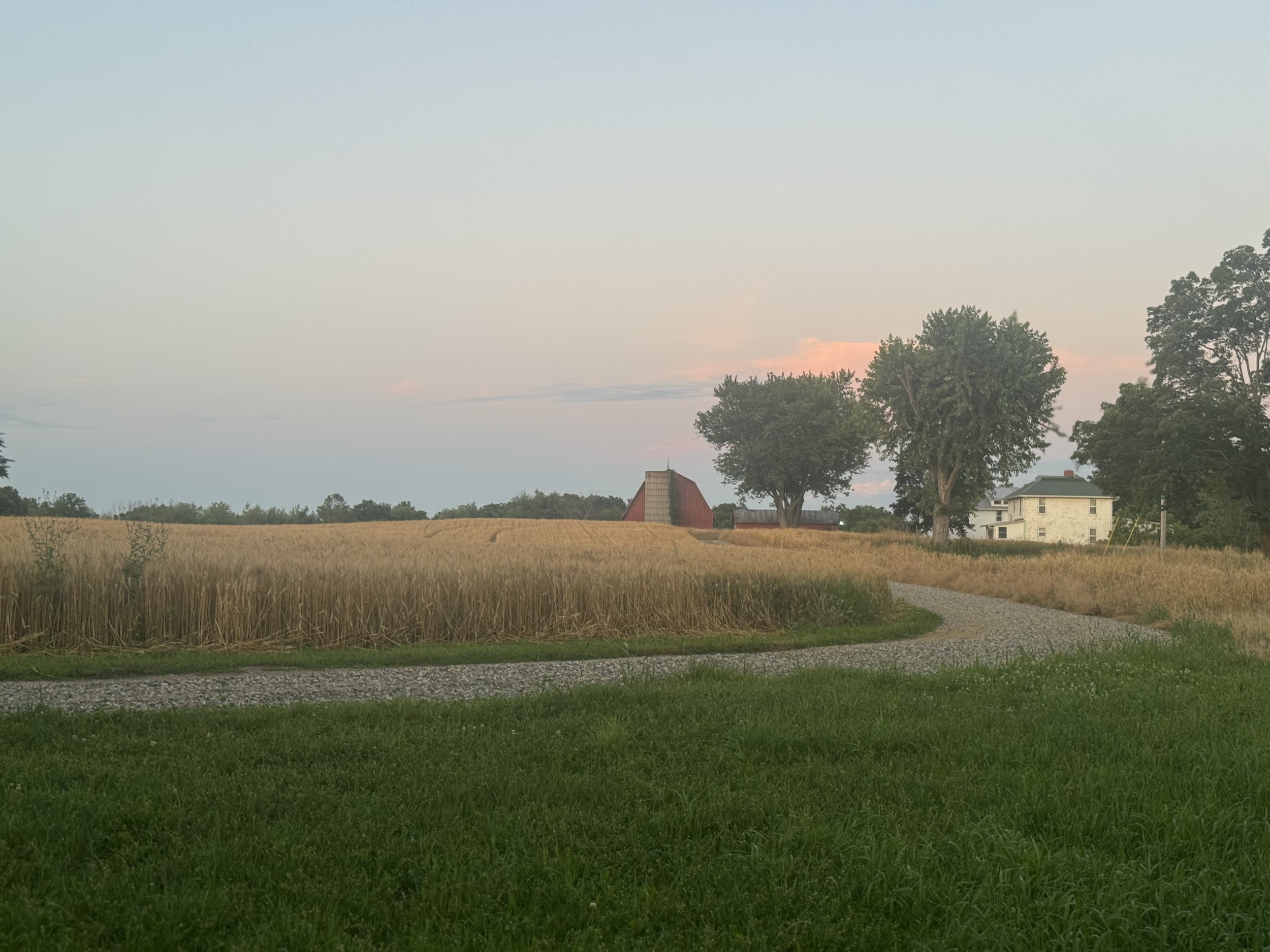
I also learned that certain experiences in life make you far less afraid of living. For me, that might include my brother striking a tree and passing away when I was thirteen or coming out with a girlfriend at twenty-one as someone who grew up Catholic in the Midwest. Of course, those aren’t the only things that make taking risks less frightening. It would be ignorant of me to leave out the fact that having financially secure parents to fall back on if you stumble makes taking chances less scary, too, and that is a privilege I do not leave unacknowledged.
And yet, I can still say that I don’t believe with a bone in my body that I’d have made these later leaps in life, whether that be moving to London or moving into a van, hadn’t these experiences taken place first. Or I would’ve pursued them far, far later in life when the weight of regret became unbearable. And I don’t think I would have come out so soon in life if my sister hadn’t come out before me. And I don’t think she would have done so that early in life if our brother hadn’t died. There’s no way to know for certain, but I can say, for myself at least, that suffering sped up the process of my evolution. I suppose it’s a bit of a domino effect with many different paths leading to the same outcome, but some paths are shorter or have secret shortcuts to the finish line.
Scary things expand your tolerance for scary things. Whatever was going to happen to me after coming out was never going to compare to my brother dying or the major depression I survived when I was eighteen. Nothing was going to be scarier than the never-ending string of panic attacks. Or if it was, I knew I would still make it out on the other side.
“Scary things expand your tolerance for scary things.”
Now: Why do I write?
When I was fourteen, I almost got it right. I had some kind of epiphany on the 18-hour drive home to Ohio from a family spring break in Florida, and as soon as we got home around 7 pm, I ran to my room, opened my laptop, and began madly researching, “How to be a travel writer.” It quickly grew dark, and hours kept passing and passing until I noticed the first rays of morning peeking through my window. I didn’t get up once to eat or use the restroom (to my own detriment once I snapped out of it); I hadn’t been aware of any bodily functions at all. I was in a total and complete flow state that I haven’t quite experienced again to this day.
As soon as I heard my mom wake up and start moving around in the kitchen, I ran down the stairs with 150+ printed papers in my hands, still high from the adrenaline of staying up all night. I stopped abruptly at the laundry room door, just nearly plowing her down. She turned around, confused, still waking up but attentive. “I finally know what I want to be when I grow up,” I said, my whole body buzzing with excitement. “And?” she asked with a genuine curiosity. “I want to be a travel writer.” I babbled on, explaining and defending, presenting my case thoroughly. She listened patiently until I was done. I was nervous; I didn’t know exactly how she’d react. “Okay. Then do it well.”
I was nervous; I didn’t know exactly how she’d react. “Okay. Then do it well.”
It certainly wasn’t my mother’s lack of confidence that led me to quickly squash that dream. It would be a combination of events that would develop into an insidious anxiety, insecurity, self-doubt, and ultimate self-hatred that took years to heal from. Misogyny was certainly a big one, and it angers me to reflect on how coolly and confidently my male peers spoke over or dismissed my female peers and me, even when I was earning higher marks than they were. Or the male psychiatrist who insisted I “switch to an easier major” when I came in, saying I was battling depression. That alone can make it slightly difficult to chase your dreams with self-confidence. But that’s an essay for another day.
The thing is, that first vision I had for my life would hunt me down until I was cornered. It would grow louder and louder the further I turned away from it, the farther I ran in the opposite direction. And in the lowest points of my depression, I would see a vague outline of it like a ship across the horizon, shrouded in fog and my own delirium, almost too blurry to name. Still, bedridden, I would write.
Why do I write? “A chorus erupts. Because we cannot simply live,” wrote Patti Smith.
I write for the same reason I wash my face in the morning and brush my teeth at night. I write in the same way I cry, in the way I listen to music, in the way I drink coffee as I watch morning light filter through the trees in my backyard each morning. I write because I always have. I write because a voice inside of me repeats itself on an eternal loop until it gets out. I write because my body reaches for pen and paper, because to take away those things would be akin to taking one of my senses. I write because I feel. I write because I breathe. I write because I must. I write because I don’t know how not to.
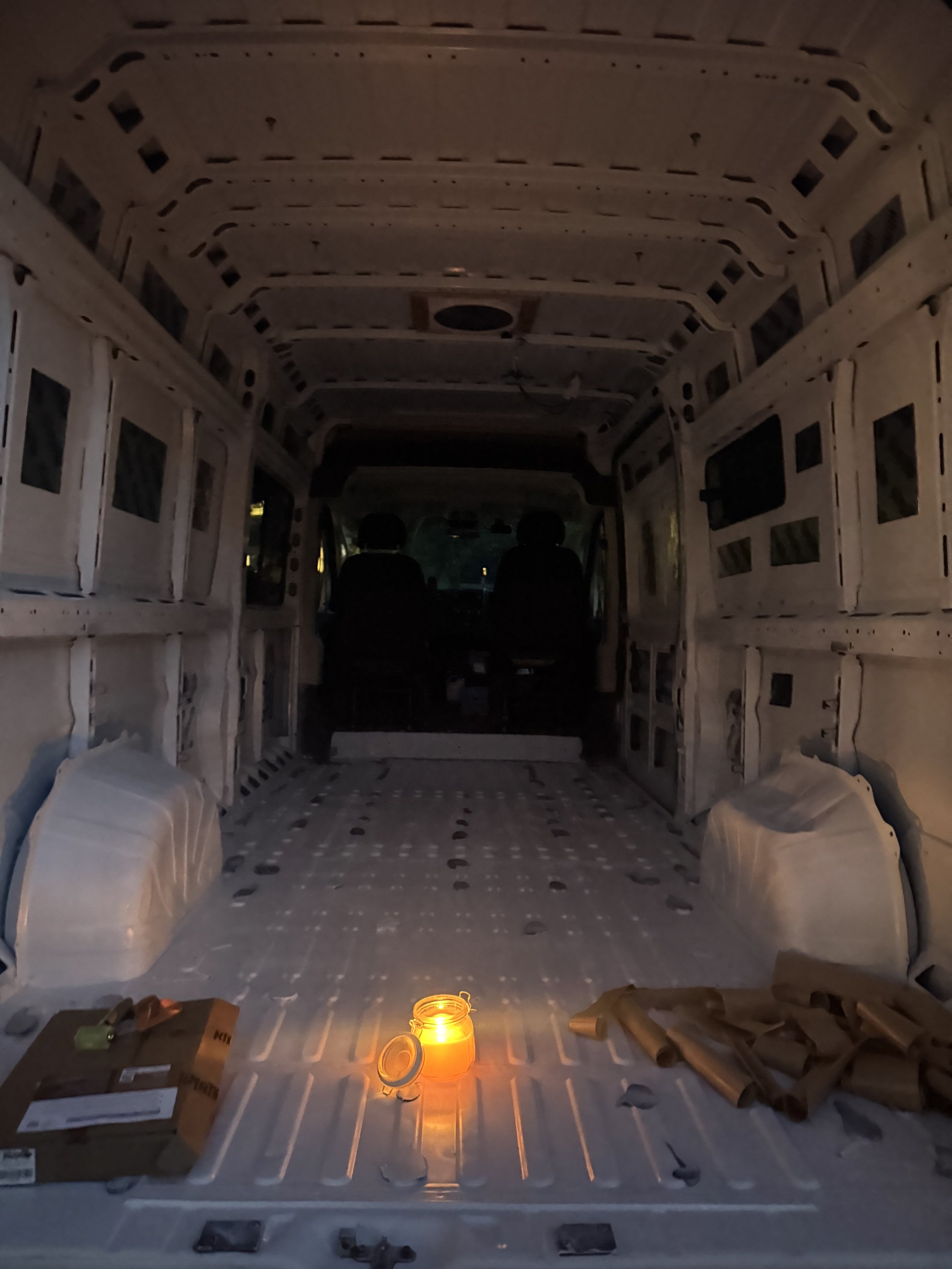
And now that I’ve found myself in this lifestyle as a vagabond, I wouldn’t say I’m “on the run.” I don’t see myself as “never satisfied.” I see myself as coming home—literally, I’m able to come home whenever I’d like, as often as I’d like, without booking flights weeks in advance or making plans to turn off heating or find someone to watch my cat. I am coming home to my deepest dreams, what I’ve known I’ve truly wanted to do all along.
That’s my compromise for now. I’d like to build community in one physical place in the future, but for now, I’m building community in this way; that is, on the road. Online. Through the digital landscape. Through passing. I’ll live on the road until little Me has had her fill, and I’ll anticipate her receiving the next little epiphany that’ll point us to the next road. It’s always older, “realistic,” doubtful, patronizing, indoctrinated Me that’s gotten in the way of her inherent knowing. I’m still learning to be quiet and listen, to put aside my judgements and fears, to be kind and compassionate and gentle and patient. I’ve learned that I’d save myself a lot of heartache if I just shut up and went along with it, serving instead as the logistical advisor who ensures the plan, the finances, and the timeline to make it happen, even if that timeline is twenty years from now, even if we have to work other small jobs in the meantime. “Okay,” I say, smiling and shrugging my shoulders. “Let’s do it well, then.”
One day I’ll be back
Red in flashing
Buses headed toward the city
I walk as if I’m not alone
Her breeze trails behind me
I came here with four suitcases
I came here with ghosts all around me
And I carry them every day
Like a bridal veil of memories
Here lies a graveyard of her giggles
A funeral for her freckles
A part of me that wanted to leave
And part of me that wanted to stay
Until I turned to stone
To stay rooted in my history
Because I don’t want to die alone
Church bells are ringing
Reminding me not to have faith in anything
Anything but the trees
Believe in the trees and their leaves
The salt in the sea
The flowers that bloom in May
The setting of the September sun
September is where we’ll stay
Initials drawn into a rotten tree trunk
Maybe we’ll grow back as fungi
I remember the snow that night so clearly
But my flight awaits me
The garage door is shutting
I hear my grandma’s voice in passing
One day I’ll be back
Sitting under a willow tree
The cardinals will still be chirping
I’ll pretend the cats are all still living
Then I promise to live simply
I swear I’ll rest peacefully
I’ll die under my willow tree
Until then I’ll count pigeons
And turn people into religion
While months keep on racing
My brother is ageing
My brother’s in a graveyard
“One day, one day”
Barefoot in a backyard
That’s not even mine in the end
Time will stand still then
I’ll be foraging for buckeyes
I’ll be thirteen again
We won’t have met yet
And my ghosts will breathe again
Pink in the face
It’s scary to live big. It’s scary to live big and keep living big and keep dreaming of a big life and keep believing that the bounds of your love are limitless. It’s scary when you love bigger and bigger and bigger, and the fear of losing that love grows bigger in turn. Surely I can’t be this happy and stay this happy? You think to yourself. My heart is too full. My heart is too full. You’re already preparing for the next tragedy. Because there’s always another tragedy looming around the corner, especially when you’re up this high. What goes up must come down. You’re already trying to imagine how much pain could equate to this much love, but you can never fully fathom it; it’s just this shapeless, daunting darkness following you around. “This won’t last, fool,” it taunts you. You want to run and hide and bring your knees to your chest because you begin to feel naked, continuing to love so big by stripping yourself bare every day to dive headfirst into this pool of vulnerability. The more vulnerable you are, the more love you can allow in, yes, and it’s glorious, but then you become utterly aware that you are naked and are becoming more naked yet as if inviting the world to take it all away, to kick you down, to laugh in your face for being so foolish to love so big, to laugh so hard, to touch and share and sit in that big fat pool of disgusting vulnerability, and showing people how much you love them, not just feeling it, but linking arms and leaning heads on shoulders and being more childish and silly and naive and naked. It’s gross and mushy and warm and awful when you’re walking home alone to go to sleep alone after basking in that lovey-dovey dovey affectionate mush all day, and you want to wash it all away. But then you remember: you didn’t bathe alone, you didn’t strip yourself bare alone, you didn’t dip in that gooey place alone. Your friends are bathing in the mush right next to you, so at least if it does come crashing down, well, at least you’ll be naked together, limbs tangled, pink in the face, the muscles in your cheeks still swelling as it all collapses from beneath you. I guess that’s all you could really want for, then - to be naked and not alone. To be naked and close and warm and pink in the face.
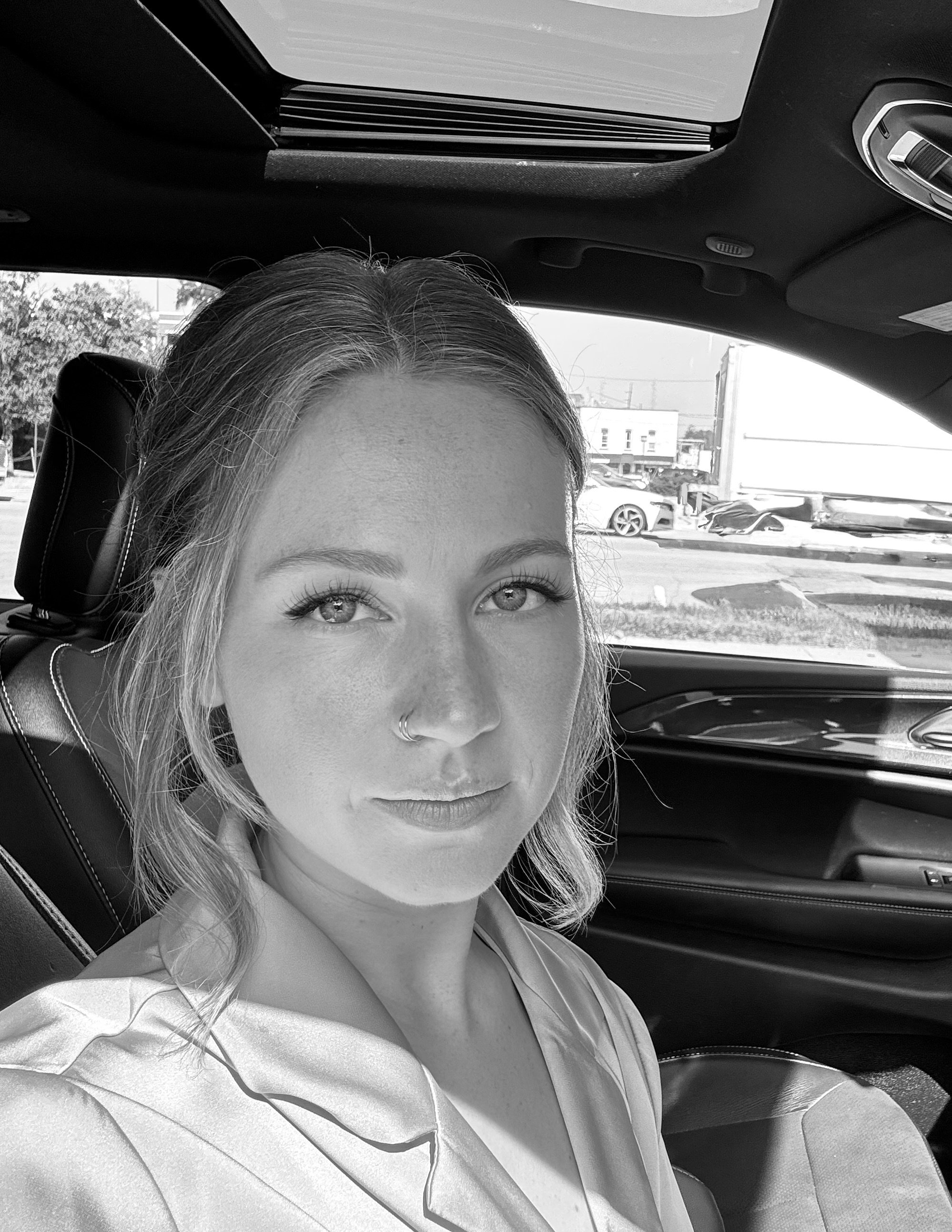
Julie Anne Hoeflinger is a 26-year-old nonfiction writer based in Toledo, Ohio, who is currently nearing the completion of a van she built to live in, her home on wheels, “Jo.” Julie writes about the natural world and the people in it, along with her own experiences and reflections.
Her work grapples with grief, faith, nature, and identity, and how that identity began to soften and blend - like a coming home to oneself despite leaving home - as she started meeting people from all over the globe. Some of these experiences include growing up Catholic in the Midwest, eventually turning to spirituality and holistic living, studying neuroscience and creative writing in her undergraduate at Ohio State, coming to terms with her identity as a queer person in her early 20s, overcoming major depression and anxiety, moving to London for two and a half years for a master’s degree in Science Journalism (with a focus in environmental writing), and now moved back home with her parents and self-converting a van to live and travel in, trying to bridge the chasm between her own beliefs and the beliefs of her parents that have created the current America we're living in - whether or not that's something that can be achieved. While on the road, Julie plans to speak with people across America, documenting their lived experiences simply and authentically. This journey across the states will form the basis of a longer nonfiction project. She is also currently writing a novella on her first (queer) love in the Midwest.
Website: juliehoeflinger.com
TikTok: @juliehoeflinger
Youtube: @corntoconcrete
Instagram: @corntoconcrete
This original work of authorship is protected under copyright law. Unauthorized reproduction, distribution, or use of this material without prior written consent from the author is strictly prohibited, except for brief quotations embodied in reviews and certain other noncommercial uses permitted by law.
If you would like to submit a guest blog for review of an essay or poetry (1500-2000 words), please reach out to tatteredscript@gmail.com.