
Triumph of Quiet and the Deep
Guest blog by Wayne David Hubbard, with original poetry
Creativity defies fixed boundaries. So does travel. Many of my creative works are born while in transit.
This pattern took shape early in my life. At age 19, months after 9/11, I found myself at Miyajima, Japan, a sacred island just south of Hiroshima.
Digital cameras were new in the early ‘00s. I had little money, and less to offer. So, I roamed whenever possible, recording life with my eyes, ears, and senses. I saw things no picture could rightly capture. I did not know these experiences would be priceless.
I began to write.
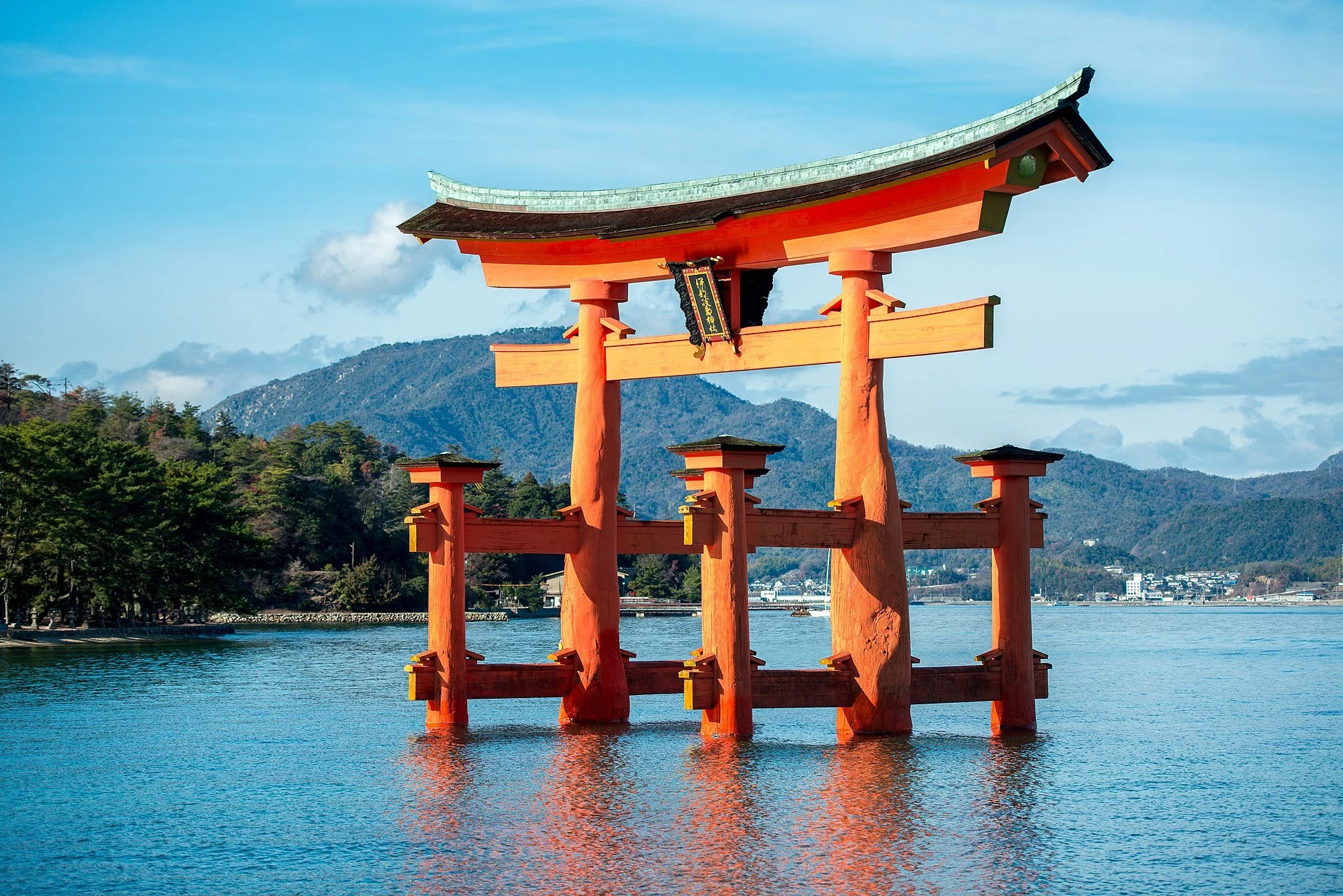
If life is a journey, between fixed limits of time -- one’s entrance (our birthday) and one’s exit (our death-day) -- the arc of creativity stretches beyond even this. Works of art strike at our hearts, sometimes, decades after the artist is gone.
Talking about creativity is difficult, but for me, talking about the people and places who make creativity feel most alive in me is easy.
ARIA, No. 16
~ for Rumi
a season
of yearning
complete
would i beg now
against fullness?
the lover
who loves you
is near
a sun
swallowing
a sun
After Miyajima, the next pivotal place on my writing journey was Joshua Tree National Park. Joshua Tree is in the high desert, east of Los Angeles, where the Mojave and Colorado Deserts meet.
Why did I go to Japan, and how did I land in California? Simple: I joined the marines and received orders. Severe difficulties were unfolding in the nation and around the world. From the Mojave Desert, I was sent to the Syrian Desert to participate in the Second Gulf War. I kept a notebook in my war pack.
I hated the desert at first. I grew up in New Jersey, a short drive from midtown Manhattan, accustomed to noise and human activity. I felt intimidated by the vast landscape of earth and sky in all directions. Silence unsettled med.
My attitudes about the desert changed one night when I looked deeply at the stars.
When I finished my military service and returned to the East Coast, I thought I would never see Joshua Tree again.
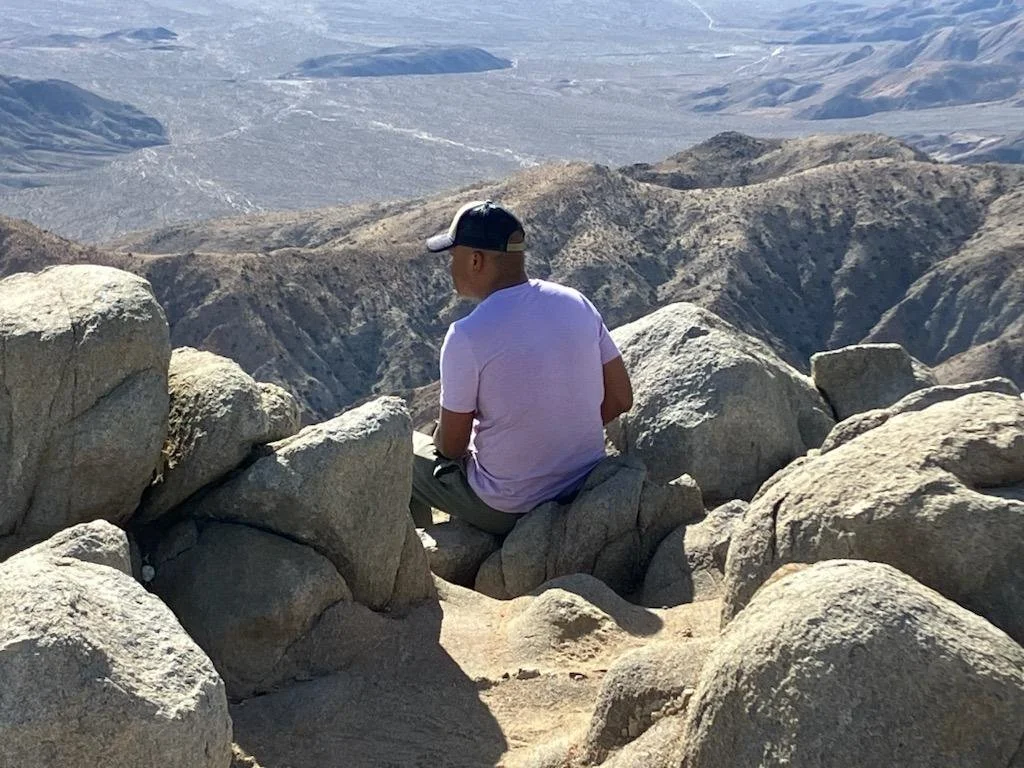
But recently, after two decades, I had a chance to return. I drove directly to my favorite overlook and walked to a favorite spot. I tried to take a picture, but I knew I would never be satisfied with it. So, I sat down and began to write a poem of gratitude.
Without my knowledge, a stranger took a picture of me sitting with my notebook. Later, they approached and offered it to me. They said I looked peaceful and very happy.
KEYS VIEW
where at twenty
he prayed
overlooking
coachella
the salton sea
san jacinto’s
eternity
where virga split
the desert’s mouth
where starlight
quenched
what war
set aflame
that he returned
at forty
must mean
it heard him
triumph of quiet
and the deep
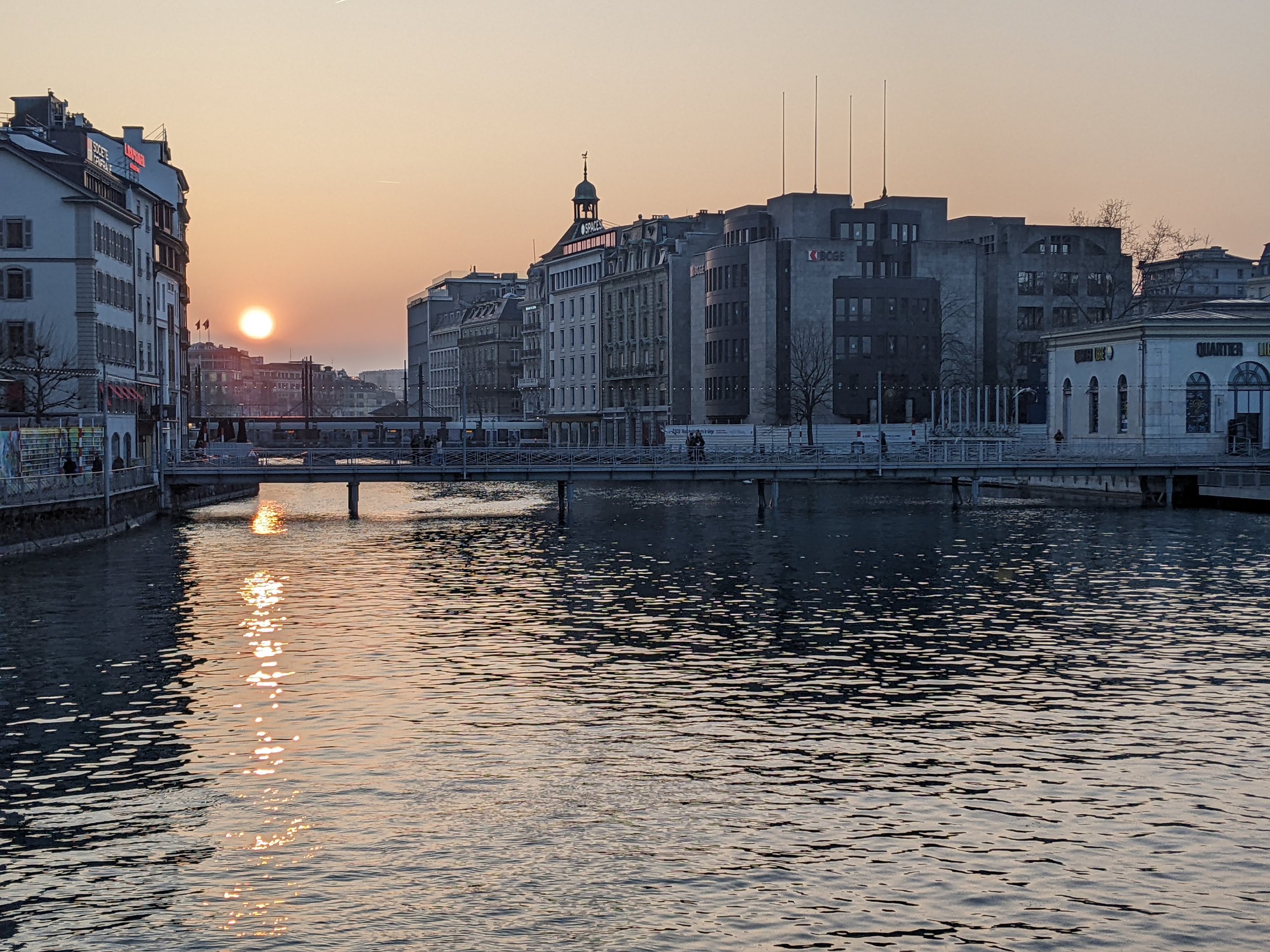
The city of Geneva is my favorite literary destination. Geneva possesses a range, depth, beauty, and diversity which I find very attractive, if not spellbinding. It is a city of contrast. I blend in here with a surprising ease.
At the city center is Saint Pierre Cathedral. This historic church sits atop generations of archaeological ruins dating back to 1st century BC.
On the city outskirts lies CERN - the European Organization for Nuclear Research, the world’s largest and most cutting-edge laboratory of science and technology. One site offers a rare window into civilizations past, the other is unlocking the future.
Geneva is also home to the United Nations Headquarters and the International Red Cross Museum – two sites of importance which aspire to keep humanity grounded, amid an imperfect, political present.
With luck and diligent planning, you can see these places in a single day. But the scale and gravity of each place is quite immense. It is best to select the right moment for a visit . . . to take one’s time.
My poems are an amalgamation of memory. This one came about in 2023 following a period of reflection and recovery resulting from overwork and stress. Oddly, I was thinking about the peace of the desert and the cathedral.
PROOF OF LIFE, No. 6
now that i am out
as a poet
nothing stalks me
in my sleep
i fear not spilling
dreams tonight
tomorrow
there may be more
i became the shell
that fell away
i flew two
thousand miles
to touch
a bougainvillea
with my eyes
if ever i could stop
my heart again
this spire
would still rise
without me
Last spring I had a profound experience near Porto, an old city in northern Portugal. I stumbled upon the Livraria Lello Foundation. The main site sits along a pilgrimage path where an ancient monastery, a castle, and a modern sculpture meet.
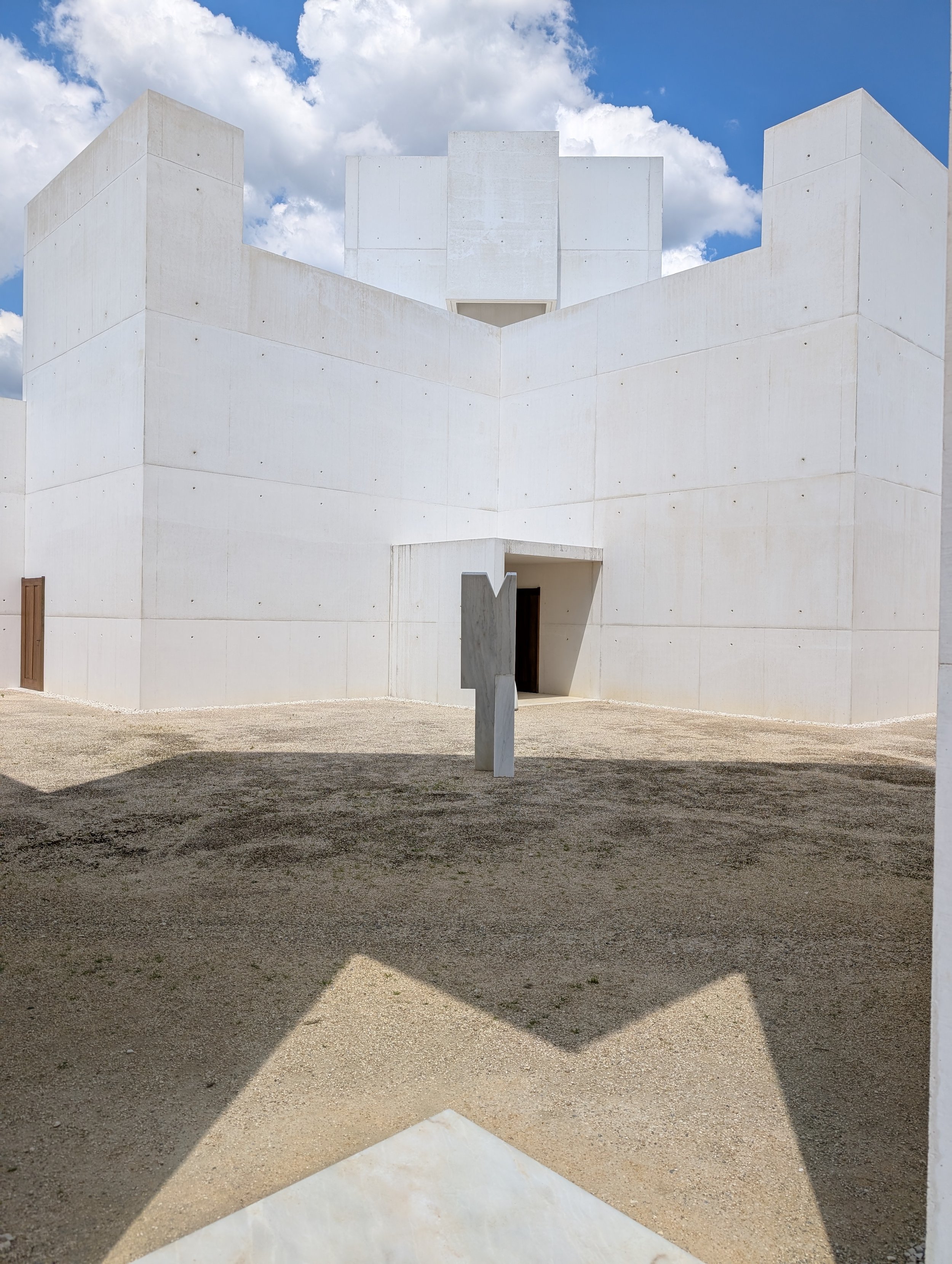
The Lello Foundation, the steward of these grounds, calls itself “a cultural entity devoted to promoting critical thinking, facilitating access to knowledge, and empowering relationships between communities and heritage”.
What might this mean in practice? And how might this relate to writing?
The foundation did not provide direct answers, yet it left clues. It was a serene place designed for the contemplation of current issues. Its art exhibits addressed subjects like media literacy, the impact of technology on social life, and our ever-changing relationship with the past in light of what feels like, to many, a turbulent future.
I took a picture of the sculpture. It stood three-stories tall with two doors and no conventional windows. Yet light poured into the structure from varying angles, thanks to a novel arrangement of openings where one would expect walls.
Unlike a conventional piece, where a viewer may take in an object from multiple perspectives, this was a sculpture you could walk inside. In one sense, it took you in as much as you took it in.
No directions were given on where to stand, or what to do, or not do. The autonomy it offered was appreciated, which may have been the point.
Before I left, I found a stone bench in the castle garden’s and sat for a long time. Thinking through the swirl of complexities that my life had become that year, I drafted this poem:
EPIGRAM
chaos
is change
without memory
a coal canary blinded
at the cavern’s mouth
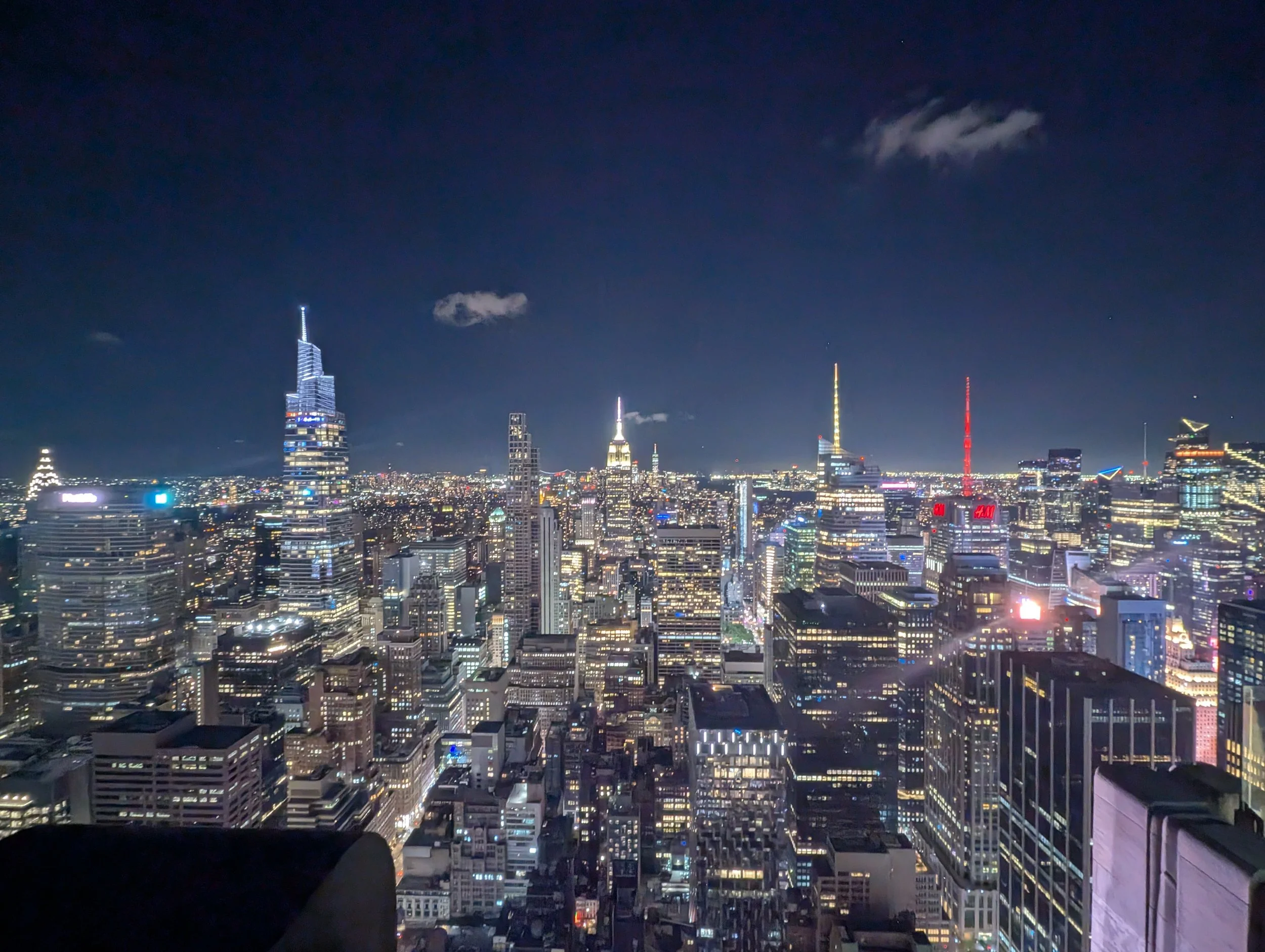
New York City is the anthesis to the desert. Life in the city is a fierce competition to determine how much density can be packed (or extracted from) its continuously contested spaces.
Unlike Geneva, which makes subtle references to its contradictions, New York makes a famous show of them. For writers of almost any culture or tongue, New York is where much comes together.
My father was born in Manhattan. My grandfather lived on Central Park West for 50 years. I never lived properly within city boundaries, but I went to college in one of its famous boroughs. In the ‘80s, I
grew up mirroring its dance moves and reciting its hip-hop through the 90s. I have gotten substantially lost in nearly every neighborhood, most often trying to find a shortcut around traffic. I still listen to 1010 WINS – just to hear what is happening.
New York is the city I understand best: constantly changing, evolving, collapsing, rebuilding, and redefining itself, simultaneously. For me, this is what creativity feels like.
THE MAYFAIR
horizons
in a single frame
on east 74th street
manhattan
between 2nd and 3rd
my grandfather
is on the corner
assisted to walk
from her lenox hill
apartment to melon’s
his wife flags
an ice cream truck
to buy him a sweet cone
cabs assail the boulevard
their horns blaring as one
towards pedestrians
defiant in a crosswalk
his gray eyes shine
to be outside at spring,
to draw new york
inside himself
and this is where
the memory stops
he turns
to look at me
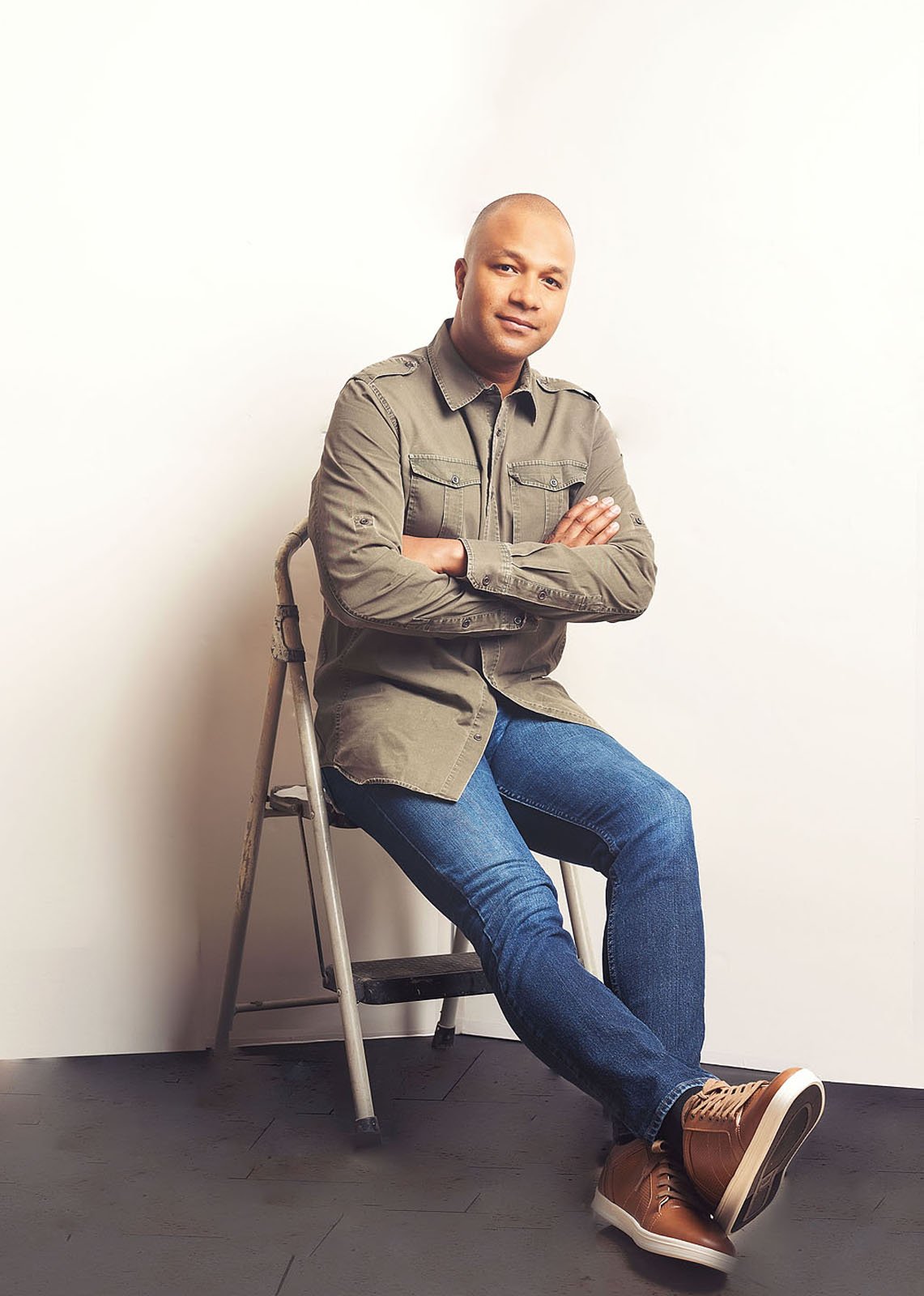
Wayne David Hubbard is an educator, a former marine, and author of two poetry collections Mobius: Meditations on Home and Death Throes of the Broken Clockwork Universe.
His works are featured in a variety of magazines and anthologies
Born and raised near Newark, New Jersey, he lives in the Shenandoah Valley and works in air traffic control.
Website: waynedavidhubbard.com
Instagram: @wdavidhubbard
Goodreads: Wayne David Hubbard
Amazon: Wayne David Hubbard
Photography Notes: All photographs were taken by Wayne David Hubbard, except for two: the Tori at Miyajima (Wiki Commons) and the photograph at Keys View (anonymous).
This original work of authorship is protected under copyright law. Unauthorized reproduction, distribution, or use of this material without prior written consent from the author is strictly prohibited, except for brief quotations embodied in reviews and certain other noncommercial uses permitted by law.
If you would like to submit a guest blog for review of an essay or poetry (1500-2000 words), please reach out to tatteredscript@gmail.com.